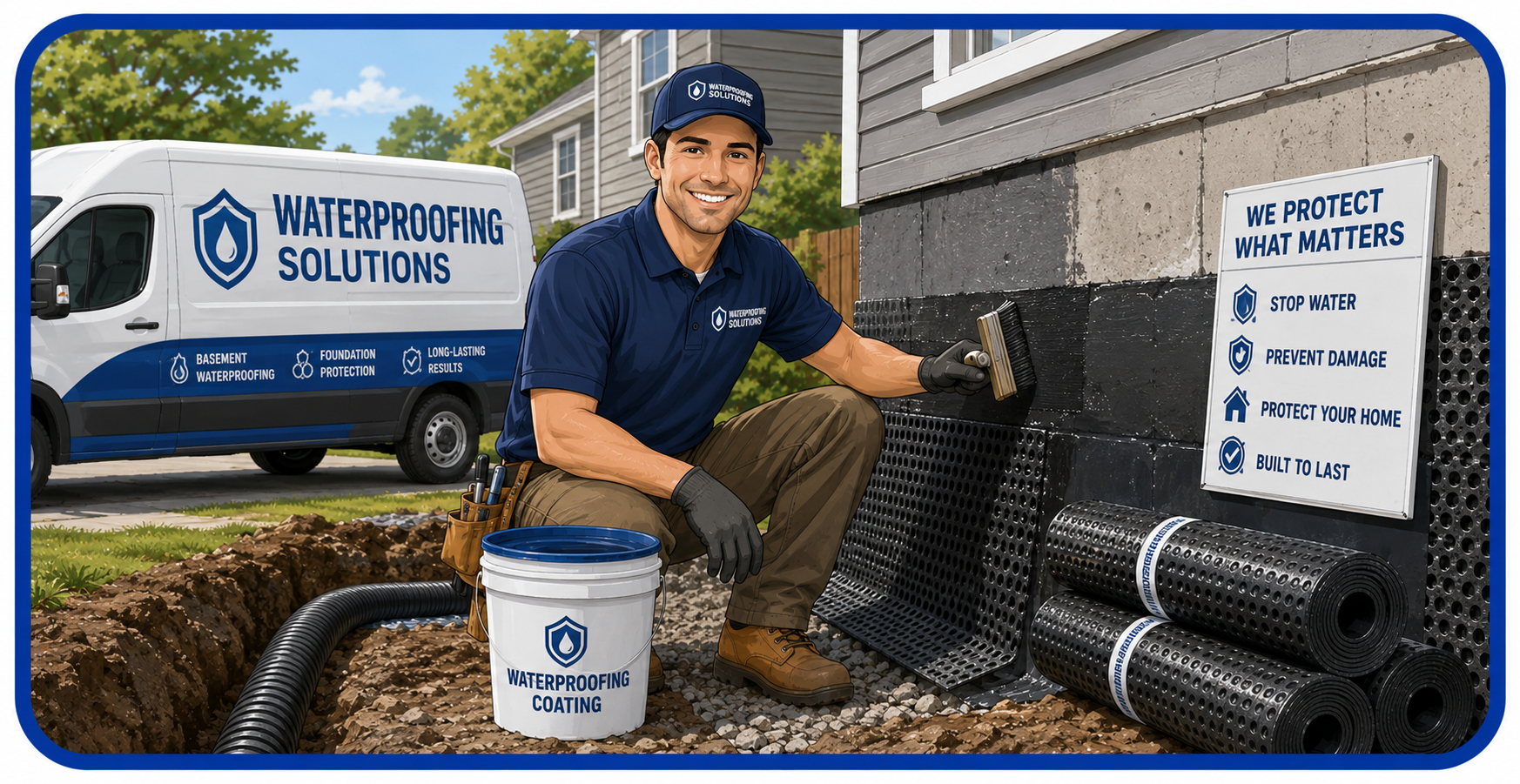
The excavation-based approach that addresses groundwater and hydrostatic pressure at the foundation exterior, not after it has already come inside.
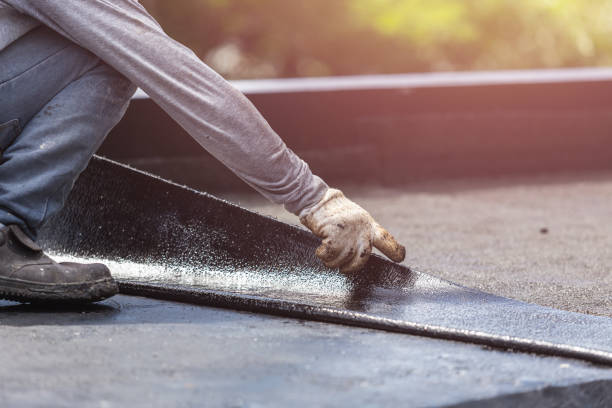
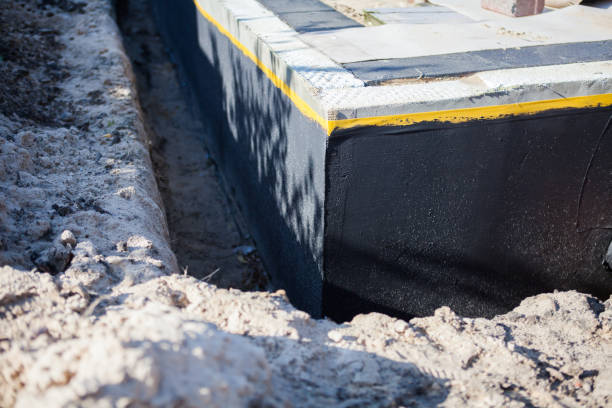
Exterior foundation waterproofing is the only method that directly interrupts the path water travels from saturated soil to basement interior, and that interruption is made permanent through a combination of membrane application, drainage board installation, and footing pipe placement. The excavation required to accomplish this is substantial, involving the removal of soil from the surface to the footing elevation along the affected foundation sections. For most Bluemont homes, this means a trench four to eight feet deep depending on foundation type and depth, wide enough to allow membrane application and drainage board placement by the installation crew.
After full excavation, the foundation wall preparation phase determines how well the finished membrane performs over time. Our teams in Bluemont remove all loose material, clean efflorescence with appropriate treatments, and fill structural cracks before membrane application. This prep phase is not optional; applying membrane to an inadequately prepared surface creates adhesion failure zones where water can migrate behind the waterproofing layer. The rubberized membrane we specify for Bluemont applications is rated for continuous soil contact and maintains flexibility across the temperature range experienced in Bluemont, VA climates.
Drainage board, sometimes called dimple board or dimple mat, is installed over the cured membrane to create a capillary break between the waterproofed wall surface and the surrounding soil. This profiled plastic sheet holds the soil away from the membrane surface and channels any water that migrates through the soil downward to the footing drain rather than allowing it to accumulate against the wall. The dimple profile creates a continuous air gap that eliminates the direct hydraulic contact between saturated soil and the foundation surface. At the base of the excavation, a perforated footing drain pipe is laid in a gravel bed alongside the footing, collects the water directed downward by the drainage board, and conveys it to daylight or to a sump pit inside the structure.
Project timing in Bluemont is an important consideration for exterior waterproofing work. The excavation and membrane application phases require periods of dry weather for proper curing, and frozen ground in winter months affects both excavation feasibility and membrane adhesion. We schedule exterior work in Bluemont, VA during the windows of the year when conditions support proper material performance. However, in cases where active water intrusion is causing immediate damage, we assess whether emergency interim measures can stabilize the situation until exterior work can be performed under appropriate conditions. Homeowners who are concerned about a tight window of opportunity should schedule assessments well in advance of their preferred project timing.
When advising Bluemont homeowners on exterior versus interior approaches, we document specific evidence of water entry mechanism: wall seepage at mid-height indicates hydrostatic pressure against the exterior wall surface, which exterior waterproofing directly resolves. Water entering at the floor-wall joint is typically addressed by interior drainage. Many older Bluemont homes show both conditions simultaneously, and a combined approach treating the exterior walls while installing perimeter interior drainage is sometimes the most comprehensive solution. We explain the evidence and the logic behind every recommendation so homeowners can make informed decisions about their specific structure.
Quality you can see in the materials and the workmanship.
Our crews handle complete foundation excavation to footing depth, not just surface-level treatments. Every project in Bluemont is fully exposed before any membrane is applied.
Material quality is the single most important variable in exterior waterproofing longevity. We specify membranes with documented performance in soil-contact applications, not basic coatings.
Our exterior waterproofing work is backed by a written workmanship warranty covering membrane adhesion, drainage board installation, and footing pipe placement.
Complete exterior foundation protection from excavation through backfill.
Our full perimeter packages address every section of exposed foundation wall, ensuring no untreated zones remain that could later become moisture entry points.
Learn moreFor Bluemont homes where moisture intrusion is isolated to specific wall sections, targeted exterior treatment of affected areas provides effective protection at lower cost than full perimeter work.
Get an assessmentSurface preparation, crack repair, and re-application of current-generation rubberized membrane over aged original coatings restores exterior protection at a fraction of total foundation replacement costs.
Schedule a reviewThe footing pipe and drainage board are the components that keep the membrane working as designed by eliminating hydrostatic pressure buildup at the wall base.
Learn about drainageWindow well issues are often treated as separate from the main waterproofing project, but connecting wells to the perimeter drainage system creates a cohesive exterior moisture management approach.
Address window wellsBackfill compaction, surface grade correction to direct water away from the foundation, and landscape restoration are included in our Bluemont exterior waterproofing projects.
See full scopeFrom assessment to restored landscape, four stages that deliver permanent basement protection.
Site evaluation covers soil type, existing drainage, foundation material, and any evidence of prior waterproofing.
Excavation depth and width are documented before work begins so the scope is clearly defined.
Wall prep, crack filling, rubberized membrane application, drainage board installation, and footing pipe placement are completed in sequence with cure time observed before backfill.
Backfill is compacted in lifts to prevent future settlement and voids. Final grade is set to direct surface water away from the foundation at the correct slope.
Real results from real homeowners who chose the permanent solution.
We had tried interior drainage twice over the years and always ended up with some seepage after heavy rain. The exterior excavation and membrane work addressed the actual wall surface and we went through the wettest spring in years without a drop of water in the basement. The crew was professional and cleaned up the yard completely.
I appreciated that they were honest about what exterior waterproofing can and cannot solve. They did not oversell it as a universal fix but explained specifically why it was the right approach for my particular moisture pattern. That kind of honesty builds trust.
The window well drainage connection they added during the project solved a secondary problem I had been ignoring for years. The well used to fill and drain slowly through the window frame during storms. Connecting it to the perimeter footing pipe eliminated that entirely.
Direct answers about the process, cost, and long-term results.
Exterior waterproofing excavation is the most disruptive type of foundation work performed on a residential property. The extent of disruption depends on what is adjacent to the affected wall sections. Established shrubs, trees, or hardscaping features within the excavation zone will likely need to be temporarily removed or may be permanently affected. We identify and document these impacts during the assessment phase so homeowners can plan for restoration. Lawns adjacent to the excavation typically recover within one to two growing seasons after proper backfill and grading. We do not minimize this aspect of the work, because setting accurate expectations upfront is essential for homeowner satisfaction with the project.
The comparison is not simply about which approach is better in the abstract; it is about which approach addresses the specific moisture entry mechanism present in your Bluemont home. Wall seepage that stains the middle of the block, migrates through cracks, or appears after saturation events is the profile that exterior waterproofing resolves most definitively. Floor-joint entry or seepage that follows the perimeter at the floor level responds better to interior channel systems. When both conditions are present, a combined approach is sometimes the most complete solution.
{Quality exterior waterproofing using modern rubberized membrane systems can protect a foundation for 20 to 30 or more years when properly installed on a well-prepared surface. The original factory-applied bituminous coatings used on homes built through the 1980s typically had a design life of 10 to 15 years under favorable soil conditions. Modern rubberized membrane materials are substantially more durable, maintain flexibility under soil movement and temperature cycling, and retain adhesion over extended periods. The key variable in longevity is surface preparation quality and membrane thickness applied; underprepared substrates and thin single-pass applications consistently underperform.|Longevity depends on the membrane product specified, surface prep quality, and subsequent drainage board and footing pipe function. When drainage board is properly installed and the footing pipe remains clear and functional, the membrane experiences minimal hydrostatic load because water is redirected before it can accumulate against the wall surface. Regular inspection of the exterior grade around the foundation and the footing drain outlet ensures the drainage system continues to function as designed over the years.}
For homeowners with active moisture problems in winter, we evaluate whether interim measures can stabilize the situation until conditions support exterior work. In some cases, temporary interior drainage can reduce immediate water damage risk while the exterior project is planned for spring. We are transparent about what winter conditions allow and advise accordingly rather than scheduling work that conditions do not support.
Resolving persistent basement moisture problems has a positive effect on property value in Bluemont's real estate market. A documented history of active basement water intrusion is a disclosure item that can complicate sales and reduce offers. A properly completed exterior waterproofing project, especially one backed by a written workmanship warranty, addresses that disclosure concern and demonstrates that a long-term solution is in place. The cost of restoration landscaping after the project is typically modest compared to the moisture damage risk eliminated and the buyer confidence created by a warranted waterproofing system.
The return on exterior waterproofing investment in Bluemont comes from several directions: prevention of ongoing moisture damage to structural elements, framing, and finishes; reduction or elimination of mold risk that creates both health and remediation costs; increased usable floor area if the basement was previously unusable due to moisture; and improved marketability and buyer confidence at the time of sale. For older homes where the original factory waterproofing has failed, the cost of continued water damage over time typically exceeds the cost of exterior treatment within several years.
Our exterior waterproofing teams are experienced in Bluemont, VA foundation conditions. Call today for an honest assessment of whether exterior treatment is right for your specific situation.
Call +1-866-476-1348 for Assessment